
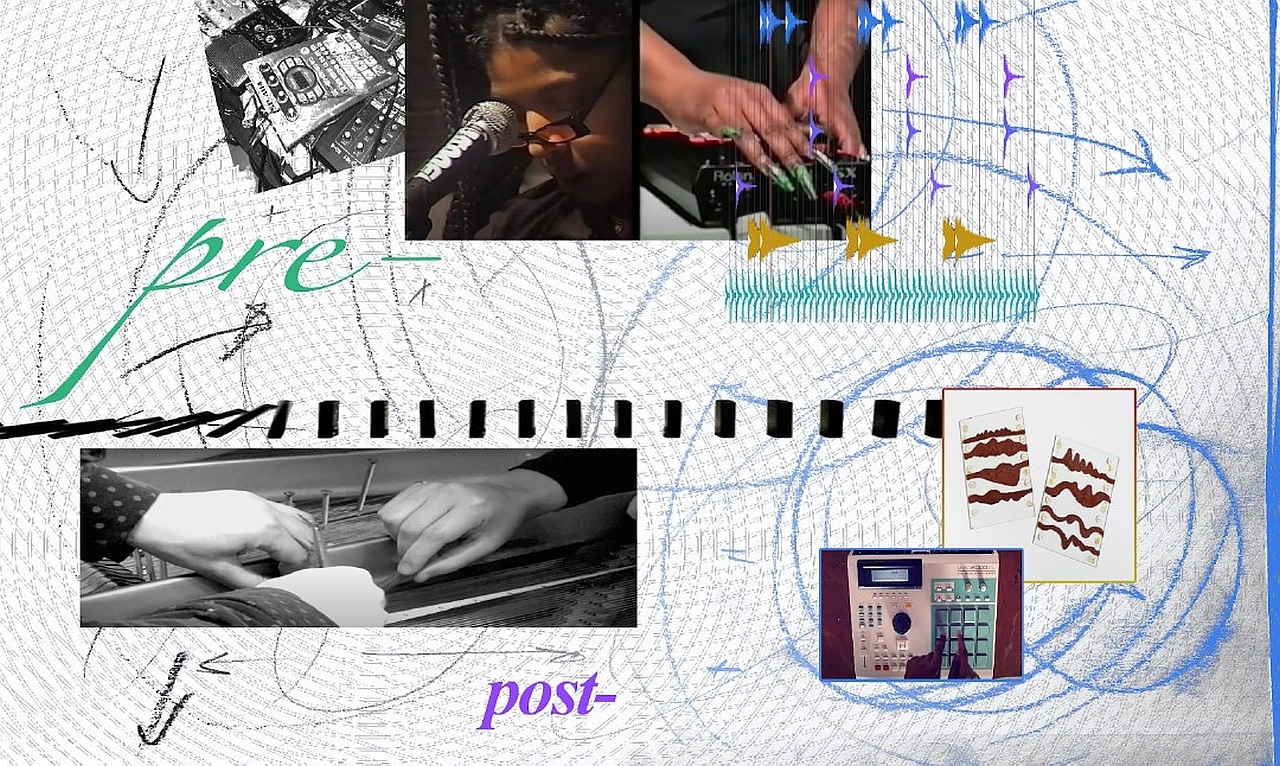
Die zweite Ausgabe von OPENWORK – einer interdisziplinären Zeitschrift, die sich mit experimenteller Musik, Kunst und Wissenschaft beschäftigt – befasst sich mit den Begriffen „Prä-“ und „Post-“ im Kontext von Musik, Klang und deren Geschichte. Die Begriffe „vor“ und „nach“ schaffen dynamische Felder der Zeitlichkeit, die Bewegung, Richtung, Abfolge und Interaktionen von Subjekten im Prozess der Transformation suggerieren. Ziel dabei ist es, die Grenzbereiche und das Dazwischen zu erforschen, die durch „vor“ und „nach“ abgegrenzt werden. In diesem Zusammenhang werden beim „Openwork Issue 2: Call for Proposal“ künstlerische und wissenschaftliche Beiträge zu und über experimentelle Musik mit dem Thema „pre-/post-“ gesucht.
Theme: pre- / post-
- Submission Deadline: January 29, 2024
- Looking for: Artistic and scholarly engagement with and around experimental music.
- Peer review process: Developmental, double-blind, collaborative.
Notions of ‘pre-’ and ‘post-’ establish dynamic fields of temporality, suggesting movement, direction, sequence, and interactions of entities in transformation. Issue 2 of openwork aims to enter the extremities and in-between territories demarcated by ‘pre-’ and ‘post-’. Invited are proposals from researchers and creative practitioners engaged with sound who critically explore overlooked and under-represented temporal narratives, be they musical, historical, or otherwise.
Navigating temporal relations, sonic works form complex networks where practice-based traditions, auditory capacities, sociocultural contexts, technological developments, and psychologies intersect and shape meanings. They also allow the anachronistic and synchronous to coalesce, creating temporalities that challenge the sequential understanding of time. Issue #2 also asks, how such sonic affordances can be harnessed to problematize and interrogate temporalities, materialities and subjectivities. The search is on contributions that critically engage with themes including, but not limited to:
- Causality in experimental music processes
- The Anthropocene and notions of pre- and post-humanity
- Reflection and analysis of musical and sonic work
- Temporalities, spatialities, and voices within the Global South
- Manifestations of pre- and post- in center-periphery relations and the margins
- Creative authorship and self-transformation
- Experiences of music and sound in everyday life
- Narratives of pre-/post-modernity and pre-/post-digital
- Musical memory and imagination
- Rhythmanalysis
- Urgency, precarity, emergency, apocalypse
- Temporalities of performance
- Evolution of musical instruments and technologies
- Pre- and post-auditory, sonic, and disciplinarity
- ‘Fade-ins’ and ‘fade-outs’
Submission formats
The aim is to represent diverse works across disciplines, welcoming contributions from both academic and non-academic spheres, particularly those not typically suited for conventional journals. As an online journal, openwork encourages digital media, including videos, audio, images, and animation, as well as imaginative uses of digital formats and online presentational possibilities, such as audio essays, interactive essays, and digital exhibitions.
Proposals are being sought for the following formats:
- Full-length academic essays (about 5000–7000 words)
- Shorter creative pieces (about 500–2500 words)
- Cultural, political, theological (etc.) commentaries, manifestos and polemics.
- Artistic reflections
- Multimedia formats that use text
- Surprises!
- Artworks
- Music: stand-alone pieces, albums, DJ sets, music videos etc.
- Duration: submission cannot exceed 50MB
- File Format: mp3, mp4 (for music videos)
- Poetry
- 2500 words maximum
- Short films, photo collections, essays or collages
- Duration: submission via an outside link
- File Format: mp4
- Music: stand-alone pieces, albums, DJ sets, music videos etc.
Proposal Submission Guidelines
- Proposals should be no longer than 250 words and may include a selected bibliography.
- Short biographies or CVs (max. 250 words) are also welcomed, but they are not required.
- Authors may choose for their proposals to be reviewed anonymously. In this case, your materials must not include any identifying information.
- If your proposal is best conveyed using audio, video or image materials (for example, references to past work or sketches of proposed work), please include up to three links to these using Dropbox, Soundcloud, Google Drive, your personal website, etc. in the body of your proposal. Please specify, as necessary, which aspects of the linked materials the selection committee should focus on using timestamps or explanatory notes. Reviewers will review up to 5 minutes of material.
- Proposals must adhere to the deadline and word limits.
- Proposals from both individual authors/artists or groups will be accepted. Only one submission is allowed per individual or group.
Submitting Your Proposal
- Proposals and CVs / Bios should be submitted as PDF files.
- Use the file naming convention: Lastname_ProposalTitle.pdf; Lastname_CV; Lastname_Bio
- If you would like to remain anonymous, please use “Anonymous” instead of “Lastname”
- Please email your proposal to the openwork editorial team at openworkjournal@gmail.com with “openwork-2 proposal” as your subject line.
- Should your proposal be accepted, you will receive an email notification by February 5th, 2024.
Peer review process
The peer review process is dialogic, fostering open conversations between contributors and reviewers. This collaboration extends to co-curating these dialogues for publication with the editorial team, seeking to foster a transformative scholarly discourse. The peer-review process works in two stages. The first stage consists of a traditional double-blind process. In the second stage, authors can choose to engage in an open dialogue with peer-reviewers and to co-curate, together with the openwork editorial committee, selections of the dialogic exchanges to be included in the published issue.
Published in partnership with Columbia University Libraries
535 West 114th St. New York, NY 10027
++++
Links